










To værktøjer til at flytte varedata ud af Shopify
Af Martin Bay
Jeg bliver regelmæssigt overrasket over hvor svært det er at udtrække data fra de forskellige webshop platforme. Det gælder ikke kun Shopify, men stort set alle webshopsystemer som jeg har kigget ind i.
Simple muligheder som CSV udtræk eller produktfeeds burde være en del af ethvert CMS hvis du spørger mig. Det er bare god service.
Jo, jeg forstår godt at det er træls at bruge ressourcer på at hjælpe en kunde med (potentielt) at flytte væk. Men overvej lige:
- Hvis webshoppen ønsker at flytte, vil de så ændre deres mening fordi dataudtræk gøres besværligt eller dyrt?
- Vil webshoppen anbefale den pågældende platformen efterfølgende, hvis flytningen gøres unødigt frustrerende?
(hos os har vi altid haft gratis CSV udtræk og produktfeed værktøjer i alle pakker. Så måske er jeg farvet :-)
Anyoo, til løsningerne
Vi flytter en del webshops fra fx Shopify over på vores platform. Og det bliver selvsagt en del nemmere, hvis man kan lave et vareudtræk på den gamle webshop. Derfor har jeg lavet en del research og fundet/lavet to værktøjer til at trække varedata ud af en Shopify webshop (selvom de prøver at gøre det svært).
1. Produktfeed
Kenneth Bon fra puretime.dk har været så venlig at dele hans løsning til et produktfeed. Du kan finde guiden og script her.
2. CSV
Baseret på Kenneths guide har jeg selv bygget et script som danner CSV data. Denne data kan du gemme som et regneark og bruge som du ønsker.
Fordelen ved CSV metoden er, at du kan få data med som ikke er en del af Googles produktfeed specifikation. For eksempel varianter, lagertal m.m. (du kan godt tilføje disse ekstra informationer til produktfeed udtrækket, bemærk blot at de færreste import-værktøjer vil acceptere dem)
Formatet i CSV filen er lavet til at matche vores egen vareimport. Afhængig af dit behov kan du selv tilpasse scriptet.
- Gå til "Online Store > Themes" i venstre menu
- På den hvide "Actions" knap, vælg "Edit code"
- Under "Templates", tilføj nyt template som navngives "collection.valgfritnavn.liquid"
- Tilføj koden fra dette script
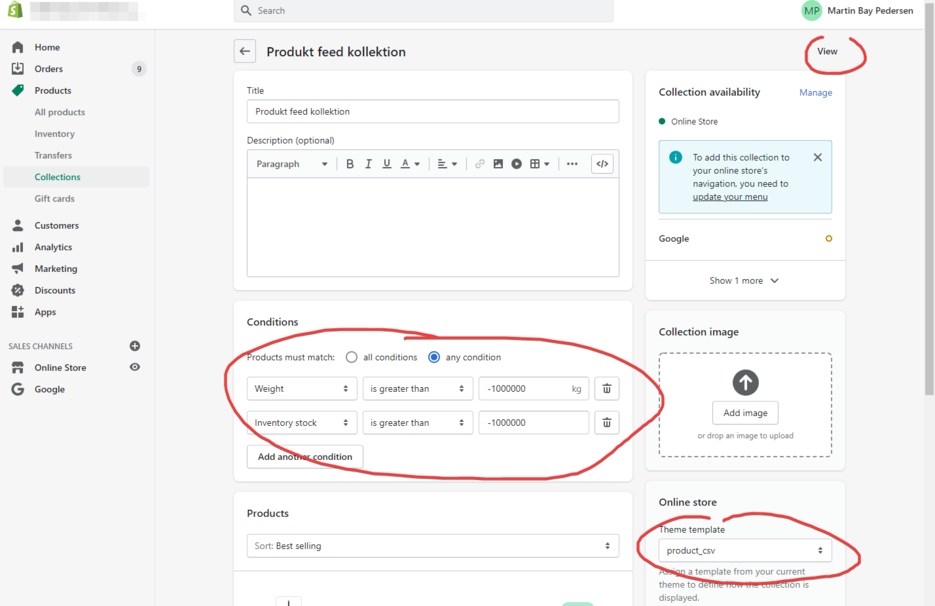
- Gå til "Products > Collections", lav en ny collection. Vælg conditions så alle varer vælges, Theme template vælg den collection som netop er oprettet (screenshot)
- Tryk "View" for at hente udtræk